
The stock market does not move randomly. One of the biggest influences on stock prices is the overall economy. Economic factors affect company profits, consumer spending, business growth, investor confidence, and market sentiment.
Successful investors closely monitor economic indicators because they help predict future market conditions and investment opportunities.
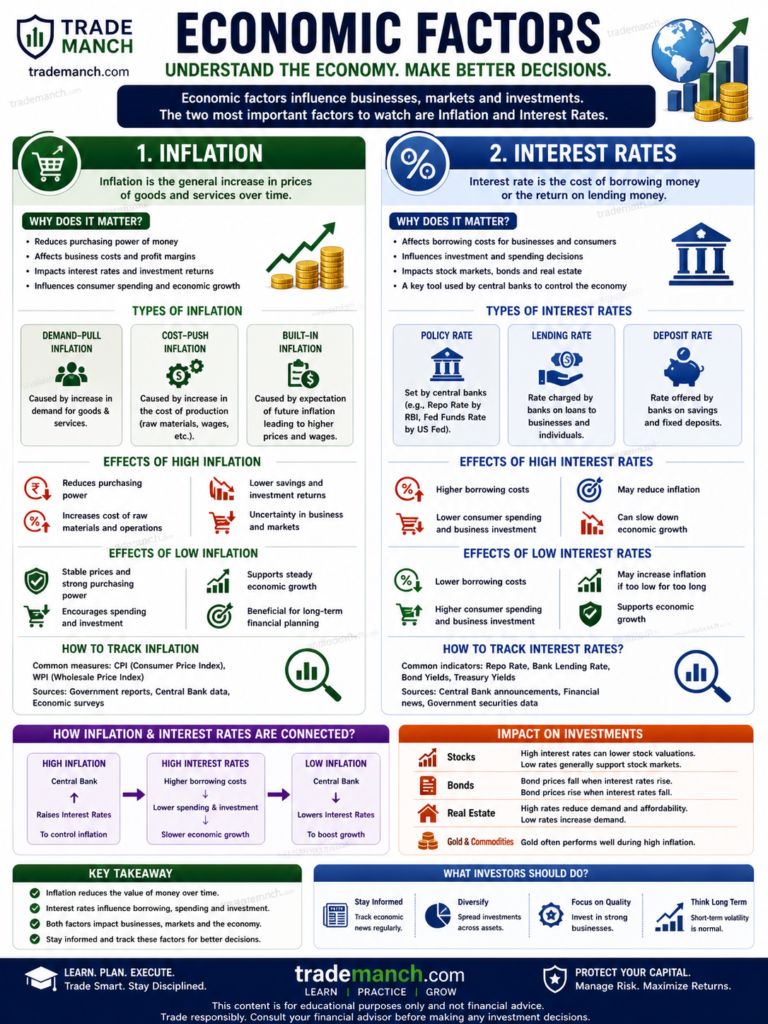
In this guide, you’ll learn the most important economic factors that influence the stock market and how investors use them to make better decisions.
What Are Economic Factors?
Economic factors are conditions and indicators that reflect the health and performance of an economy.
These factors influence:
- Business growth
- Corporate earnings
- Consumer spending
- Investment activity
- Stock market performance
Simple Definition of Economic Factors
Economic factors are economic conditions that affect businesses, investors, and stock market movements.
Why Economic Factors Matter in Stock Market
Economic conditions directly impact:
Company Profits
Strong economies usually support higher earnings.
Investor Confidence
Positive economic data encourages investment.
Market Valuations
Economic growth often leads to higher stock prices.
Business Expansion
Companies invest more during favorable economic periods.
Major Economic Factors Affecting Stock Market
GDP Growth (Gross Domestic Product)
GDP measures the total value of goods and services produced within a country.
Why GDP Is Important
GDP reflects economic growth.
Strong GDP growth generally indicates:
- Higher business activity
- Increased consumer spending
- Better corporate earnings
Impact on Stock Market
Rising GDP
Usually positive for stocks.
Falling GDP
May create concerns about economic slowdown.
Inflation
Inflation measures the increase in prices of goods and services over time.
Why Inflation Matters
Moderate inflation is normal.
However, excessive inflation can:
- Reduce purchasing power
- Increase business costs
- Lower profits
Impact on Stock Market
Low to Moderate Inflation
Generally supports economic growth.
High Inflation
Can negatively affect stock markets.
Interest Rates
Interest rates are among the most important economic indicators.
In India, rates are managed by:
- Reserve Bank of India
Why Interest Rates Matter
Interest rates affect:
- Loans
- Savings
- Business investments
- Consumer spending
Lower Interest Rates
Benefits include:
- Cheaper loans
- Increased spending
- Higher business investments
Usually positive for stocks.
Higher Interest Rates
May lead to:
- Reduced borrowing
- Lower spending
- Slower economic growth
Often negative for stocks.
Employment Data
Employment indicates economic strength.
Why Employment Matters
More jobs generally mean:
- Higher income
- Increased consumer spending
- Stronger economic growth
Impact on Stock Market
Rising Employment
Usually positive.
Rising Unemployment
May signal economic weakness.
Consumer Spending
Consumer spending drives economic activity.
Why It Matters
Higher spending supports:
- Company revenues
- Economic growth
- Corporate profits
Sectors Sensitive to Consumer Spending
Retail
FMCG
Automobile
Consumer Electronics
Industrial Production
Measures manufacturing and industrial output.
Why It Matters
Higher production often indicates:
- Strong demand
- Economic expansion
Impact on Stock Market
Growing production is generally positive for industrial companies.
Government Policies
Government actions significantly affect markets.
Examples
Tax Policies
Can influence profitability.
Infrastructure Spending
Supports economic growth.
Industry Incentives
Encourage investment and expansion.
Fiscal Deficit
Fiscal deficit occurs when government spending exceeds revenue.
Why It Matters
Large deficits may lead to:
- Higher borrowing
- Inflation concerns
Impact on Markets
Moderate deficits are manageable.
Excessively high deficits may worry investors.
Exchange Rates
Exchange rates affect international trade and investments.
Indian Rupee vs US Dollar
- Indian Rupee
- United States Dollar
Weak Rupee
Benefits:
- Exporters
- IT companies
- Pharmaceutical companies
Strong Rupee
Benefits:
- Import-dependent businesses
Crude Oil Prices
India imports a large amount of crude oil.
Why Oil Prices Matter
Oil influences:
- Transportation costs
- Inflation
- Manufacturing costs
Rising Oil Prices
May hurt profitability and increase inflation.
Falling Oil Prices
Generally positive for India’s economy.
Foreign Institutional Investors (FIIs)
FIIs invest large amounts of capital in Indian markets.
Examples
- Global Mutual Funds
- Pension Funds
- Sovereign Funds
FII Buying
Usually supports stock prices.
FII Selling
May increase market volatility.
Global Economic Conditions
India is connected to the global economy.
Major Influences
- United States Economy
- China Growth
- Global Trade
- Commodity Markets
Economic Cycles
Economies move through cycles.
Expansion
Economic growth increases.
Stocks often perform well.
Peak
Growth reaches its highest point.
Recession
Economic activity slows.
Markets may decline.
Recovery
Growth begins improving again.
Markets often recover before the economy.
Leading Economic Indicators
These indicators help predict future economic activity.
Stock Market Performance
Markets often move before economic data.
Manufacturing Orders
Indicate future production.
Consumer Confidence
Reflects spending intentions.
Housing Activity
Important for economic growth.
Lagging Economic Indicators
These indicators confirm trends after they occur.
Unemployment Rate
Corporate Profits
Inflation Trends
Economic Factors and Different Sectors
Banking Sector
Sensitive to interest rates.
Examples:
- HDFC Bank
- ICICI Bank
IT Sector
Sensitive to global economic conditions.
Examples:
- Infosys
- Tata Consultancy Services
Automobile Sector
Sensitive to consumer spending and interest rates.
Real Estate Sector
Highly affected by borrowing costs.
How Investors Use Economic Data
Professional investors monitor:
GDP Growth
Economic expansion.
Inflation Reports
Price stability.
Interest Rate Decisions
Monetary policy direction.
Employment Data
Consumer strength.
Global Economic News
International developments.
Common Beginner Mistakes
Ignoring Economic Indicators
Economic conditions significantly affect stocks.
Reacting to Every News Event
Focus on major trends.
Looking Only at Company Data
Economic factors matter too.
Ignoring Global Influences
International events often impact domestic markets.
Best Economic Indicators for Beginners
Focus on:
GDP Growth
Inflation
Interest Rates
Crude Oil Prices
FII Activity
Economic Factors vs Company Factors
| Economic Factors | Company Factors |
|---|---|
| GDP Growth | Revenue Growth |
| Inflation | Profit Margin |
| Interest Rates | Earnings Growth |
| Employment | Debt Levels |
| Currency Rates | Cash Flow |
Successful investors analyze both.
Economic factors play a vital role in stock market performance. Indicators such as GDP growth, inflation, interest rates, employment, consumer spending, exchange rates, crude oil prices, and government policies influence corporate earnings and investor sentiment.
Investors who understand economic factors can better identify opportunities, manage risks, and make informed investment decisions. While company analysis remains important, understanding the broader economic environment provides valuable context for successful investing.
Remember: the stock market often reflects future economic expectations, making economic awareness an essential skill for every investor.
Frequently Asked Questions (FAQs)
What are economic factors in the stock market?
Economic factors are conditions such as GDP growth, inflation, interest rates, and employment that affect stock prices.
Why is GDP important for investors?
GDP reflects economic growth and business activity.
How does inflation affect stocks?
High inflation can increase costs and reduce profitability.
Why do interest rates matter?
Interest rates affect borrowing, spending, and investment activity.
What is the role of RBI in the stock market?
The Reserve Bank of India manages monetary policy and interest rates.
How do oil prices affect Indian stocks?
Oil prices influence inflation, costs, and economic growth.
Why do investors track FIIs?
Foreign Institutional Investors significantly influence market liquidity and sentiment.
What is an economic cycle?
The recurring pattern of expansion, peak, recession, and recovery.
Which economic indicator is most important?
GDP growth, inflation, and interest rates are among the most important.
Should beginners learn economic analysis?
Yes. Understanding economic factors helps investors make better decisions and understand market movements.