
🔍 What is a Pin Bar Pattern?
The Pin Bar (Pinocchio Bar) candlestick pattern is a rejection candle that shows price tried to move in one direction but was strongly rejected.
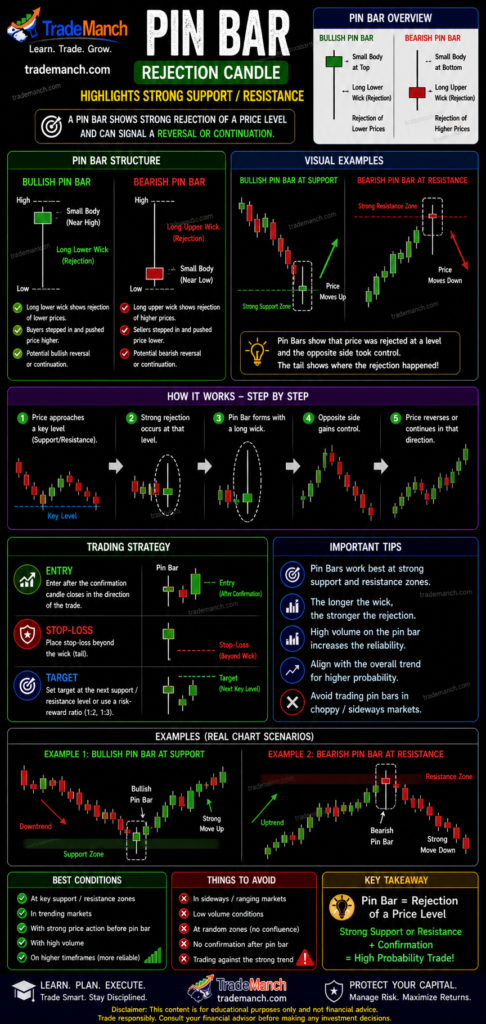
👉 It highlights strong support or resistance levels and often signals a reversal or continuation move.
📈 Key Features of a Pin Bar
- 📏 Long wick (shadow) showing rejection
- 📦 Small real body near one end of the candle
- ❌ Very small or no wick on the opposite side
- 📍 Appears at key support/resistance zones
💡 Types of Pin Bar
🟢 Bullish Pin Bar
- Long lower wick
- Appears at support
- Signals price rejection downward → move upward
🔴 Bearish Pin Bar
- Long upper wick
- Appears at resistance
- Signals price rejection upward → move downward
💡 Psychology Behind the Pattern
The Pin Bar reflects a false breakout and strong rejection:
- Price moves aggressively in one direction
- Opposite side enters with force
- Price reverses and closes near the opposite end
👉 This shows one side trapped, and the other side gaining control.
✅ How to Trade the Pin Bar
🔹 Strategy:
- Identify Key Level
Look for support or resistance zones. - Spot the Pin Bar
Check for long wick and small body. - Wait for Confirmation
Enter after next candle confirms direction. - Entry Point
- Buy above high (bullish pin bar)
- Sell below low (bearish pin bar)
- Stop Loss
Place beyond the wick (extreme point). - Target
Use key levels or risk-reward (1:2 or higher).
⚠️ Common Mistakes to Avoid
- ❌ Trading pin bar in random areas (not at key levels)
- ❌ Ignoring trend direction
- ❌ Weak wick (not a true rejection)
- ❌ Entering without confirmation
🔗 Pin Bar vs Hammer & Shooting Star
| Pattern | Wick Direction | Signal |
|---|---|---|
| Pin Bar | Either | Rejection |
| Hammer | Lower | Bullish reversal |
| Shooting Star | Upper | Bearish reversal |
🚀 Pro Tips for Better Accuracy
- Combine with Support & Resistance Zones
- Use trend direction (higher timeframe)
- Look for false breakout setups
- Confirm with volume spike
The Pin Bar pattern is one of the most powerful tools in price action trading. It clearly shows rejection and market intent, helping traders enter high-probability trades.