
Trading psychology is one of the most important factors in stock market success. Many beginners focus only on strategies, indicators, and technical analysis, but the real difference between successful traders and losing traders is often mindset and emotional control.
Even the best trading strategy can fail if a trader cannot control fear, greed, impatience, and emotional decisions.
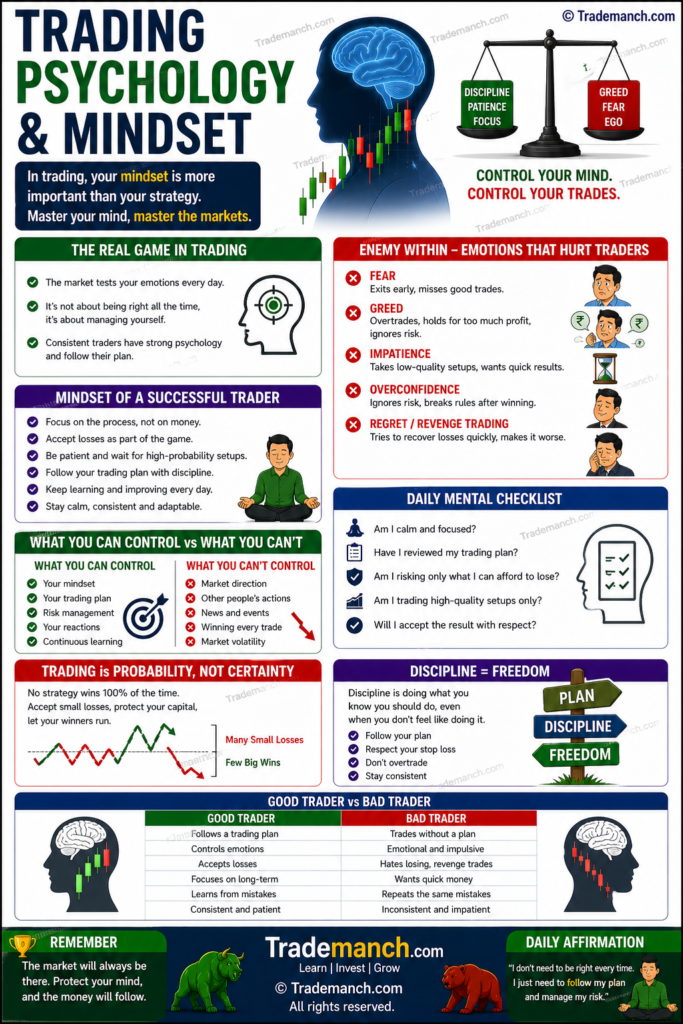
In this complete beginner-friendly guide, you will learn what trading psychology is, common emotional mistakes, mindset techniques, and how to develop the discipline needed for successful trading in 2026.
What Is Trading Psychology?
Trading psychology refers to the emotions, mindset, discipline, and mental behavior that affect trading decisions.
It includes:
- Fear
- Greed
- Patience
- Confidence
- Discipline
- Emotional control
Trading psychology directly impacts:
- Entry decisions
- Exit decisions
- Risk management
- Consistency
Simple Definition of Trading Psychology
Trading psychology is the ability to control emotions and make disciplined trading decisions.
Why Trading Psychology Is Important
Many traders lose money not because of bad strategies, but because of:
- Emotional trading
- Lack of patience
- Overtrading
- Fear and greed
A strong mindset helps traders:
- Follow their strategy
- Control risk
- Stay consistent
- Avoid emotional mistakes
The Reality of Trading
Trading is not:
- A quick-rich scheme
- Guaranteed income
- Easy money
Trading requires:
- Learning
- Patience
- Practice
- Discipline
- Emotional control
Beginners should understand that losses are a normal part of trading.
Common Emotions in Trading
1. Fear
Fear is one of the biggest enemies of traders.
Fear causes:
- Early exits
- Hesitation
- Missing opportunities
- Panic selling
Example:
A trader exits a profitable trade too early because of fear of losing profit.
2. Greed
Greed makes traders:
- Hold trades too long
- Take excessive risk
- Ignore stop losses
- Overtrade
Greed often destroys trading discipline.
3. Hope
Hope causes traders to hold losing trades expecting recovery.
Example:
- A stock keeps falling
- Trader refuses to exit
- Losses become larger
4. Revenge Trading
After a loss, some traders immediately take random trades to recover money quickly.
This often leads to:
- More losses
- Emotional decisions
- Poor risk management
5. Overconfidence
After winning several trades, traders may:
- Ignore rules
- Increase position size
- Take unnecessary risks
Overconfidence often leads to major losses.
What Is Trading Mindset?
Trading mindset means having:
- Discipline
- Patience
- Emotional balance
- Long-term thinking
Professional traders focus more on process than profits.
Difference Between Professional and Emotional Traders
| Professional Trader | Emotional Trader |
|---|---|
| Follows strategy | Trades emotionally |
| Uses risk management | Takes random risks |
| Accepts losses calmly | Panics during losses |
| Focuses on consistency | Focuses only on profits |
| Patient and disciplined | Impulsive decisions |
Importance of Discipline in Trading
Discipline means following your trading plan consistently.
Disciplined traders:
- Use stop loss
- Follow entry rules
- Manage risk properly
- Avoid emotional trades
Without discipline, even good strategies fail.
Accepting Losses in Trading
Losses are normal in trading.
Even professional traders face losses regularly.
The goal is not to win every trade.
The goal is to:
- Keep losses small
- Maintain profitability over time
Importance of Risk Management
Risk management protects traders from large losses.
A common rule:
- Risk only 1–2% of trading capital per trade.
Example:
If capital is ₹1,00,000 and risk is 1%:
100000×0.01=1000
Maximum risk per trade = ₹1,000.
What Is FOMO in Trading?
FOMO means:
- Fear Of Missing Out
Traders enter trades late because they fear missing profits.
FOMO usually leads to:
- Bad entries
- Emotional buying
- Losses
What Is Patience in Trading?
Patience means:
- Waiting for proper setups
- Avoiding unnecessary trades
- Following strategy carefully
Good traders often wait hours or days for quality opportunities.
Why Beginners Overtrade
Many beginners:
- Trade too frequently
- Force trades
- Chase profits
Overtrading increases:
- Emotional stress
- Brokerage costs
- Losses
Sometimes the best trade is no trade.
Importance of Trading Plan
A trading plan gives structure and discipline.
A good trading plan includes:
- Entry rules
- Exit rules
- Stop loss
- Risk management
- Position sizing
Professional traders follow written plans.
What Is Trading Journal?
A trading journal records:
- Trades taken
- Entry and exit points
- Mistakes
- Emotions
- Lessons learned
Journaling helps traders improve over time.
How to Build Strong Trading Psychology
1. Focus on Learning
Beginners should focus on:
- Skill development
- Market understanding
- Consistency
Not quick profits.
2. Use Proper Risk Management
Protect capital first.
Without capital, trading becomes impossible.
3. Accept Uncertainty
No strategy wins every trade.
The market is unpredictable.
4. Avoid Emotional Decisions
Do not trade based on:
- Fear
- Greed
- Excitement
- Anger
5. Trade With a Plan
Always follow predefined rules.
6. Start Small
Beginners should trade with small capital initially.
This reduces emotional pressure.
7. Maintain Realistic Expectations
Trading success takes time.
Avoid unrealistic expectations like:
- Doubling money quickly
- Daily guaranteed income
Importance of Mental Health in Trading
Trading stress can affect mental health.
Traders should:
- Take breaks
- Sleep properly
- Avoid excessive screen time
- Maintain work-life balance
Healthy mind improves decision-making.
How Social Media Affects Trading Psychology
Many beginners lose money because they blindly follow:
- Telegram tips
- YouTube hype
- Social media influencers
Always:
- Do your own research
- Avoid emotional hype trading
Psychology of Winning Traders
Successful traders usually:
- Stay calm
- Follow systems
- Think long term
- Control emotions
- Accept losses professionally
Trading is more about consistency than excitement.
Common Beginner Mistakes
Taking Large Risks
High risk increases emotional pressure.
Ignoring Stop Loss
Leads to large losses.
Chasing the Market
Entering trades after big moves.
Switching Strategies Frequently
Consistency is important.
Expecting Instant Success
Trading skills require time to develop.
Best Habits for Traders
Follow Routine
Maintain trading discipline daily.
Analyze Mistakes
Learn from every trade.
Stay Patient
Avoid impulsive trades.
Keep Emotions Under Control
Emotional stability is critical.
Focus on Long-Term Growth
Think in months and years, not single trades.
Trading Psychology in Bull and Bear Markets
Bull Market Psychology
- Overconfidence increases
- Traders take excessive risks
Bear Market Psychology
- Fear and panic increase
- Emotional selling becomes common
Successful traders stay disciplined in both conditions.
Can Beginners Master Trading Psychology?
Yes, but it takes:
- Practice
- Self-awareness
- Discipline
- Experience
Trading psychology improves gradually over time.
Trading psychology is one of the most important aspects of successful trading. Fear, greed, impatience, revenge trading, and emotional decisions are the main reasons why many beginners fail in the stock market.
A strong mindset, disciplined trading plan, proper risk management, patience, and emotional control are essential for long-term success. Beginners should focus on consistency, learning, and protecting capital rather than chasing quick profits.
In trading, mindset is often more important than strategy.
Frequently Asked Questions (FAQs)
1. What is trading psychology?
Trading psychology refers to emotions and mindset that affect trading decisions.
2. Why is psychology important in trading?
Emotional control helps traders follow discipline and avoid mistakes.
3. What is fear in trading?
Fear causes hesitation, panic selling, and early exits.
4. What is greed in trading?
Greed makes traders take excessive risks and ignore rules.
5. What is FOMO in trading?
FOMO means Fear Of Missing Out, causing emotional entries.
6. Why do beginners lose money in trading?
Common reasons include emotional trading, poor risk management, and lack of discipline.
7. How can traders improve mindset?
Through practice, journaling, discipline, and emotional control.
8. Is risk management important in trading?
Yes, risk management is essential for long-term survival.
9. What is revenge trading?
Taking emotional trades after losses to recover money quickly.
10. Can trading psychology be learned?
Yes, trading psychology improves with experience and disciplined practice.