
Financial news plays a crucial role in the world of investing and trading. Every day, stock prices move because of economic data, corporate earnings, government policies, interest rate decisions, global events, and investor sentiment. Investors who stay informed about these developments are often better prepared to make smart financial decisions.
Whether you are a beginner investor, swing trader, long-term investor, or professional trader, following financial news can help you understand market trends, manage risks, and identify new opportunities.
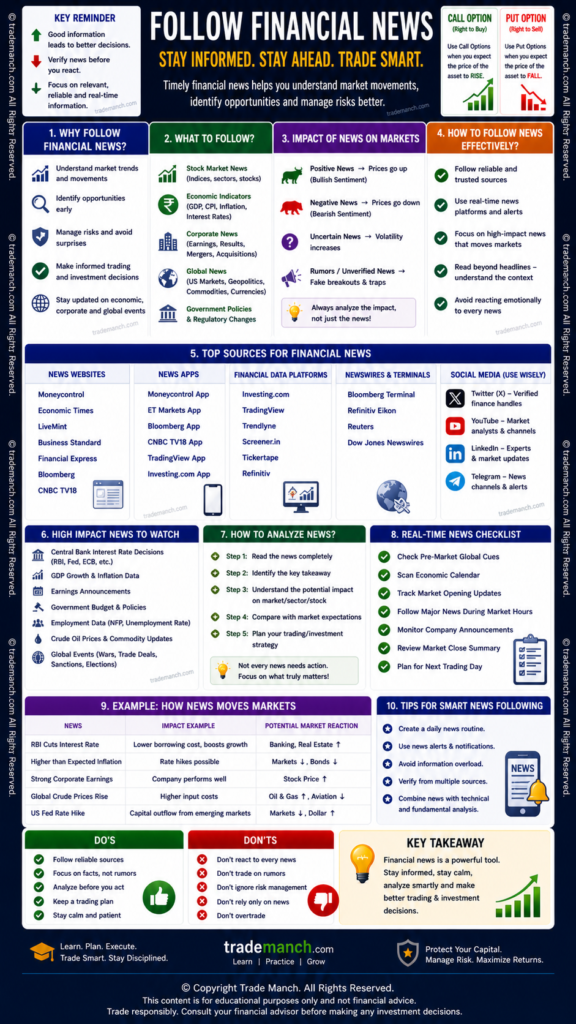
In this complete guide, you’ll learn why financial news matters, what types of news affect markets, how to use news effectively, and common mistakes investors should avoid.
What Is Financial News?
Financial news refers to information related to:
- Stock markets
- Companies
- Economy
- Government policies
- Interest rates
- Inflation
- Global markets
- Commodities
- Currencies
Financial news helps investors understand factors that influence market movements.
Simple Definition of Financial News
Financial news is information about economic events, companies, and financial markets that may affect investment decisions.
Why Financial News Is Important
Financial news helps investors:
- Understand market direction
- Identify opportunities
- Manage risk
- Monitor investments
- Stay informed about economic changes
Markets often react quickly to important news events.
How Financial News Affects the Stock Market
Stock prices are influenced by expectations about future earnings and economic conditions.
Positive news can lead to:
- Increased buying
- Rising stock prices
- Higher investor confidence
Negative news can lead to:
- Increased selling
- Falling stock prices
- Greater market volatility
Types of Financial News Every Investor Should Follow
Company News
News related to individual companies.
Examples:
- Earnings reports
- New product launches
- Acquisitions
- Leadership changes
- Dividend announcements
These events can significantly affect stock prices.
Economic News
Economic indicators influence the overall market.
Examples:
- GDP Growth
- Inflation Data
- Employment Reports
- Manufacturing Data
Strong economic data often supports market growth.
Interest Rate Decisions
Interest rates are among the most important market drivers.
In India, decisions by:
- Reserve Bank of India
can impact:
- Stocks
- Bonds
- Currency markets
Higher interest rates often create pressure on equities.
Government Policies
Government decisions can affect industries and markets.
Examples:
- Tax changes
- Budget announcements
- Infrastructure spending
- Regulatory reforms
Global Financial News
International developments often influence domestic markets.
Examples:
- Global recessions
- Trade agreements
- Geopolitical conflicts
- Commodity price changes
Why Traders Follow Financial News
Traders use financial news to:
- Identify volatility
- Find trading opportunities
- Understand market sentiment
- Manage risk around major events
News can trigger significant short-term price movements.
Why Long-Term Investors Follow Financial News
Investors use financial news differently.
They focus on:
- Business fundamentals
- Industry trends
- Economic growth
- Long-term opportunities
Investors are generally less concerned with short-term market noise.
Important Financial News Events
Corporate Earnings
Quarterly earnings reports are major market events.
Investors monitor:
- Revenue Growth
- Profit Growth
- Future Guidance
Strong earnings often support stock prices.
Inflation Reports
Inflation measures rising prices in the economy.
Higher inflation can:
- Increase costs
- Reduce purchasing power
- Impact interest rates
GDP Growth
GDP measures economic activity.
Strong GDP growth often supports:
- Business expansion
- Corporate profits
- Market confidence
Employment Data
Employment reports indicate economic strength.
Strong employment generally supports economic growth.
Budget Announcements
Government budgets often affect:
- Infrastructure companies
- Banking sector
- Manufacturing sector
- Tax-sensitive industries
Financial News and Market Sentiment
Market sentiment refers to the overall mood of investors.
Positive Sentiment
Investors are optimistic.
Results may include:
- Rising stock prices
- Increased buying
Negative Sentiment
Investors become cautious.
Results may include:
- Market declines
- Increased volatility
How to Use Financial News Effectively
Understand the Context
Do not react to headlines alone.
Understand:
- What happened
- Why it happened
- Long-term implications
Focus on Relevant News
Not all news impacts your investments.
Prioritize:
- Company-specific developments
- Economic indicators
- Industry trends
Combine News with Analysis
Financial news should complement:
- Fundamental Analysis
- Technical Analysis
- Risk Management
Avoid Emotional Decisions
Many investors panic after negative news.
Successful investors stay disciplined.
Financial News and Market Volatility
Major news events often increase volatility.
Examples:
- Interest rate decisions
- Elections
- Economic reports
- Earnings announcements
Higher volatility can create both opportunities and risks.
Best Financial News Sources
Investors should rely on credible sources.
Examples include:
- Moneycontrol
- Bloomberg
- Reuters
- CNBC
Always verify information before acting on it.
Financial News for Different Types of Investors
Intraday Traders
Focus on:
- Breaking news
- Market-moving events
- Economic announcements
Swing Traders
Focus on:
- Earnings reports
- Sector trends
- Momentum news
Positional Traders
Focus on:
- Economic trends
- Corporate performance
- Industry developments
Long-Term Investors
Focus on:
- Business fundamentals
- Competitive advantages
- Long-term growth drivers
Common Mistakes Investors Make
Following Rumors
Always rely on credible information.
Reacting Too Quickly
Avoid making impulsive decisions.
Ignoring Fundamentals
News should support—not replace—research.
Overconsuming News
Too much information can create confusion.
Chasing Headlines
Not every news event creates a meaningful investment opportunity.
How Beginners Should Follow Financial News
Step 1
Spend 15–30 minutes daily reviewing important news.
Step 2
Focus on major economic and market events.
Step 3
Track companies you own or plan to buy.
Step 4
Learn how different events affect markets.
Step 5
Avoid emotional reactions.
Financial News and Long-Term Wealth Creation
Long-term investors benefit from understanding:
- Economic cycles
- Industry trends
- Corporate developments
Staying informed helps investors make better strategic decisions.
Can Financial News Predict the Market?
No.
Financial news provides information but cannot predict future market movements with certainty.
Markets are influenced by:
- Expectations
- Investor sentiment
- Economic conditions
- Global events
Successful investors use news as one part of a broader decision-making process.
Following financial news is an essential habit for every investor and trader. Financial news provides valuable insights into economic conditions, company performance, government policies, and global events that influence financial markets.
However, successful investing is not about reacting to every headline. It is about understanding the information, evaluating its impact, and making disciplined decisions based on research and long-term goals.
By combining financial news with sound analysis and risk management, investors can make more informed decisions and improve their chances of long-term success.
Frequently Asked Questions (FAQs)
1. What is financial news?
Financial news covers information related to markets, companies, economies, and investments.
2. Why is financial news important?
It helps investors understand factors that influence market performance.
3. Should beginners follow financial news?
Yes. It helps build market awareness and investment knowledge.
4. What types of financial news affect stocks?
Earnings reports, economic data, interest rates, government policies, and global events.
5. How often should investors follow financial news?
A daily review of important developments is generally sufficient.
6. Can financial news predict stock prices?
No. It provides information but cannot guarantee future market movements.
7. What is market sentiment?
Market sentiment reflects the overall attitude of investors toward the market.
8. Why do traders monitor news closely?
News often creates volatility and short-term trading opportunities.
9. What are reliable sources of financial news?
Trusted financial media and official economic sources.
10. Should investment decisions be based only on news?
No. Financial news should be combined with proper research, analysis, and risk management.