
🔍 What is a Matching High Pattern?
The Matching High candlestick pattern is a bearish continuation or resistance confirmation pattern where two candles form nearly the same high level.
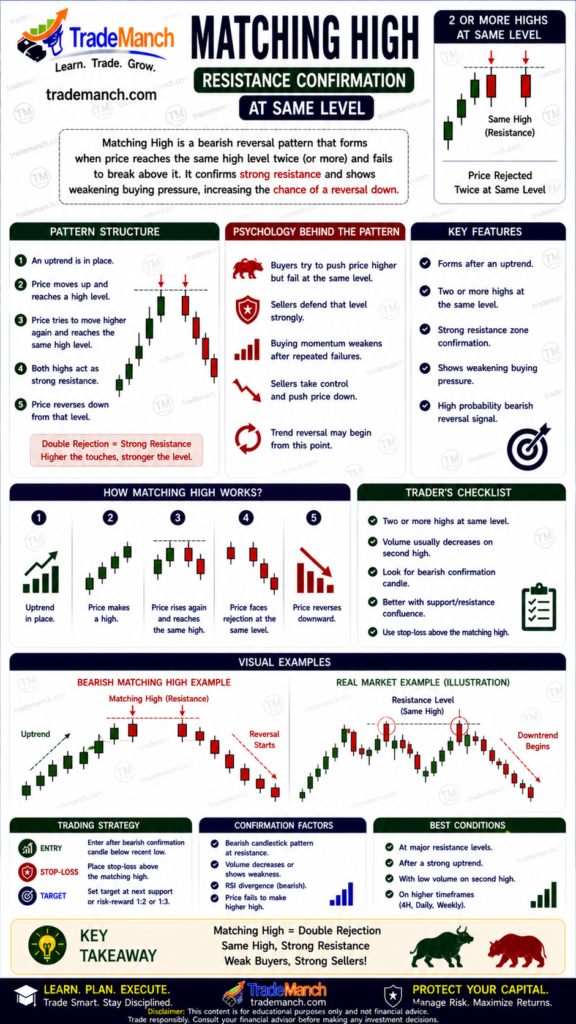
👉 It signals that buyers are struggling to push prices above resistance, and selling pressure may increase.
📈 Structure of the Matching High Pattern
The pattern usually consists of two candles:
- 🟢 First bullish candle during an uptrend
- 🟢 or 🔴 Second candle reaches nearly the same high as the first candle but fails to break higher
👉 The repeated rejection at the same level confirms strong resistance.
💡 Psychology Behind the Pattern
The Matching High reflects buyer exhaustion near resistance:
- Buyers push prices upward
- Market tests the same resistance level again
- Sellers defend the level strongly
👉 This shows bullish momentum may be weakening.
✅ How to Trade the Matching High Pattern
🔹 Step-by-Step Strategy:
- Confirm Existing Uptrend
Pattern works best after a bullish move. - Identify Equal Highs
Look for two candles rejecting the same resistance level. - Wait for Bearish Confirmation
A bearish candle afterward strengthens the setup. - Entry Point
Sell below the confirmation candle low. - Stop Loss
Place above the resistance/high level. - Target
Use support zones or pullback targets.
⚠️ Common Mistakes to Avoid
- ❌ Trading without resistance confirmation
- ❌ Ignoring volume analysis
- ❌ Entering before confirmation candle
- ❌ Using in sideways low-volatility markets
🔗 Matching High vs Tweezer Top
| Pattern | Key Feature | Signal |
|---|---|---|
| Matching High | Same highs | Resistance confirmation |
| Tweezer Top | Same highs + reversal setup | Bearish reversal |
👉 Matching High focuses more on resistance holding than immediate reversal.
🚀 Pro Tips for Better Accuracy
- Combine with Resistance Levels
- Use volume decrease for buyer weakness
- Confirm with RSI overbought signals
- Watch for breakdown below support
The Matching High pattern is a useful signal showing that the market is facing strong resistance at a key level.
👉 While it may not always cause a major reversal, it often warns traders that bullish momentum is slowing.